Top 100 Teams
International League (Triple-A)
By Bill Weiss & Marshall Wright, Baseball Historians
During the 1930s and 1940s, the best team in the American League - the New York Yankees - kept most of their top prospects on the rosters of two top minor league teams. One of these clubs was in Kansas City, where the American Association Blues enjoyed the Yankees’ largess. The other team played closer to home, in Newark, New Jersey. In 1941, the Newark Bears enjoyed the fruit of this relationship, putting together one of the strongest teams of the era.
From the beginning of baseball history in the 1850s, amateur teams from Newark like the Eureka club challenged their counterparts from the surrounding regions. In 1884, a team called the Domestics played in the Eastern League, one of America’s first pro minor leagues. Following a pennant with a 68-26 club in 1886, the team left the circuit.
In 1887, a new team from Newark joined the prestigious International League. This team, which was known as the Little Giants, featured an African-American battery. The pitcher, George Stovey, won 33 games while pitching to Fleet Walker, who had broken the color barrier in the majors three years earlier with Toledo. Behind Stovey and Walker, the team finished 59-39, four games out of first.
During the rest of the 19th century, Newark placed teams in the Central (1888) and Atlantic (1896-1900) Leagues in addition to the Atlantic Association (1889-90). The best team of the group played in 1888, where the Trunkmakers won the Central League flag with a record of 83-23, finishing with one of the highest winning percentages (.783) of the era.
In 1902, the city began a long relationship with the top-tier Eastern League which was renamed the International in 1912. Languishing through its first few years in the loop, the team, called first the Sailors then the Indians, broke through to win its first pennant in 1913 under Hall-of-Famer Iron Man McGinnity.
Following the 1914 season, millionaire oilman Harry Sinclair transferred the Indianapolis Federal League club to Newark and the International League franchise moved to Harrisburg midway through the 1915 season. The Federal League folded after the 1915 season and Newark resumed International League competition in 1916, playing at Harrison Field, which had been built for the Feds. Newark was without baseball in 1920, the franchise having been transferred to Syracuse, but Akron moved to Newark for 1921. Newark had a succession of second-division teams in this period and, as a crowning blow, Harrison Field burned down in 1923, forcing the Bears to use old, unsuitable Meadowbrook Oval. Finally, on May 16, 1925, with the 8-20 Bears in last place, the team moved to Providence.
Charles Davids built a new 18,000-seat facility he called Davids Stadium, purchased the Providence Grays and brought the team back to Newark. However, after two years, he was forced to relinquish the Bears and they were bought by newspaper and magazine publisher Paul Block, who acquired the club at a receiver’s sale for $360,000 and the absorption of $160,000 in notes owed by the previous management. Block encountered financial problems as the Depression worsened and in November 1931, was forced to sell the club.
Following the 1931 season, the team received a shot in the arm. On November 12, Col. Jacob Ruppert, the owner of the New York Yankees, bought the Newark franchise for a reported $600,000. For many years, Ruppert and other owners had noticed the success of the Cardinals team behind the leadership of Branch Rickey. Rickey had developed a series of “farm teams” - minor league teams where he could develop Cardinal talent. To this end, Ruppert purchased the Bears to serve the Yankees as their primary farm team. Newark’s era of baseball glory was about to begin.
For Newark, the relationship paid immediate dividends. In 1932, infused with Yankee farm hands, the team roared to the International League pennant, finishing with a 109-59 record and a place on the minor league’s top 100 list. Success continued, as the team won pennants the next two years. Following a brief drought, another pair of top 100 champions ran roughshod over the league in 1937-38. In 1940, the Bears finished second, but won the Governor’s playoff and the Junior World Series. After this triumph, another colossus was poised for greatness in 1941.
The 1941 Newark Bears won the pennant with ease, finishing the season with a 100-54 record and a 10 game lead over Montreal. In the playoffs, the Bears bested Rochester, four games to one, before being upset by Montreal, four games to three, in the finals. The team finished with a league best .271 team batting average, accompanied by league highs in runs scored (765), hits (1369) and home runs (129).
The manager of the ’41 Bears was 40-year-old Johnny Neun, in his fourth season as the Newark pilot. Neun played six years with the Tigers and Braves and hit .325 for Boston in 1930. On May 31, 1927, while with Detroit, he became one of only two first basemen in major league history to execute an unassisted triple play. In 1946, Neun, then a Yankees coach, managed the team for 14 games, and piloted Cincinnati for 254 games in 1947-48.
Offensively, the club was led by a pair of outfielders, Tommy Holmes and Frank Kelleher. Holmes, well-known for his 37-game hitting streak for the Braves in 1945, batted .302 with a league-leading 190 hits. Kelleher, who played a handful of games for the Reds in 1942-43, finished first in the home run (37) and RBI (125) races. Kelleher enjoyed a 22-year professional career, swatting a total of 358 minor league home runs.
Johnny Lindell (23-4) led the league in ERA (2.05) and percentage (.852). He achieved major league success as an outfielder with a .273 career average in 12 years with the Yankees, Cardinals, Pirates and Phillies. Hank Borowy (17-10) went 46-25 for the Yankees in 1942-44. In 1945, he was 10-5 with New York and 11-2 for the Cub’s last pennant winner, a combined 21-7 season. In ten years in the majors, he posted a 108-82 record.
Russ Christopher (16-7), Allen Gettel (12-9) and Tommy Byrne (10-7) rounded out the staff. Byrne did well for the Yanks, enjoying back-to-back 15 game winning seasons in 1949-50. Christopher was not as lucky. Instead of enjoying service with the perennial champions, he toiled in obscurity for the A’s, going 4-13 in 1942.
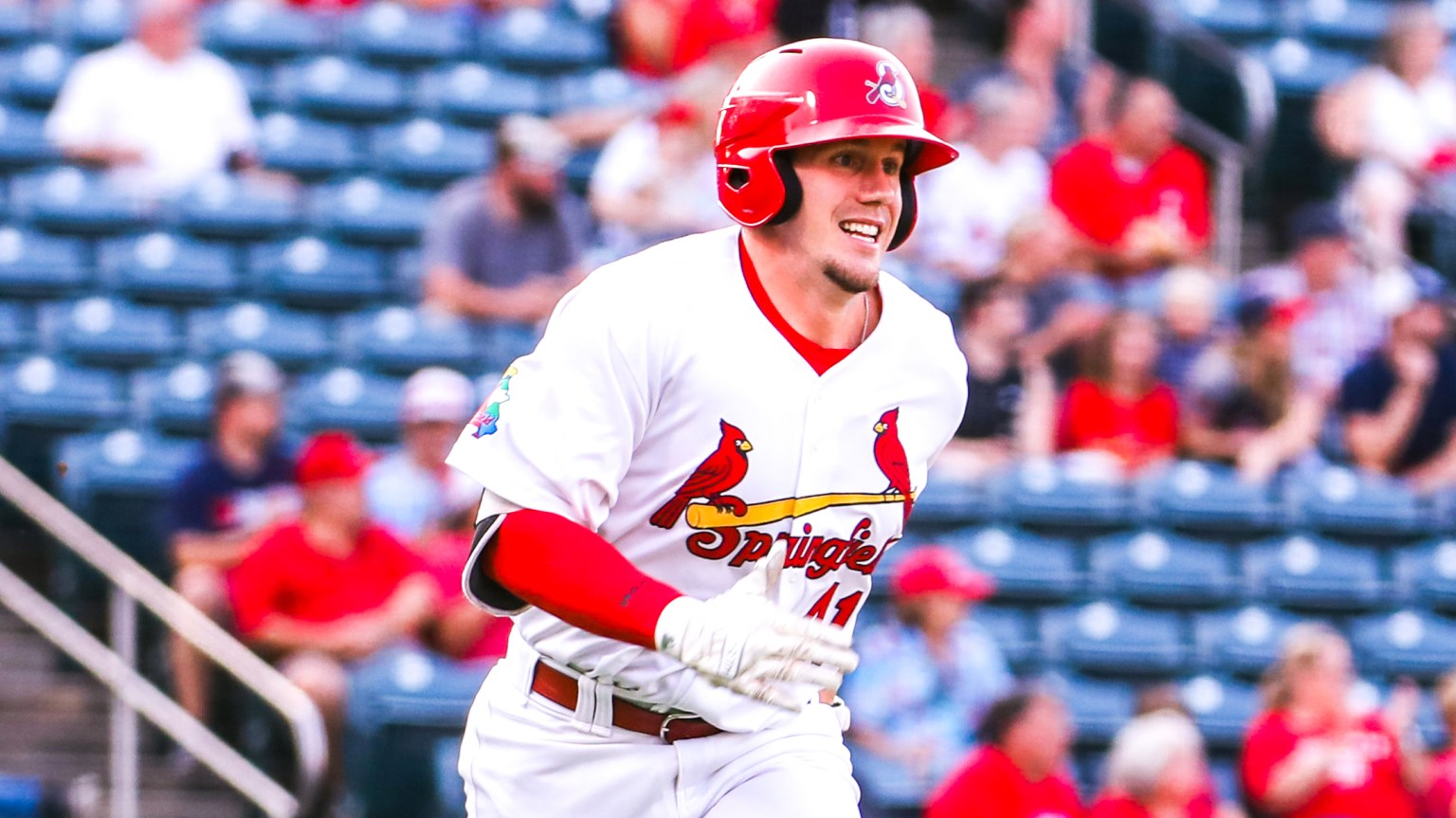
After 1941, the Newark Bears continued their successful ways, winning pennants in 1942 and 1944. Following the 1949 season, suffering as a victim of dwindling attendance because of television and of their proximity to the major-league New York market, the team was relocated to Springfield, Massachusetts.
During the 1930s and 1940s, the Newark Bears were a testament to the success of the farm system. Using a bevy of former and future Yankee stars, Newark won eight pennants in 13 years - placing four of the winners on the top 100 list. Although garnering fewer wins than the other three, the 1941 champions were a strong team in their own right, well deserving of their place among the minor league’s elite.
| 1941 International League Standings | |||||||||||||
|---|---|---|---|---|---|---|---|---|---|---|---|---|---|
| TEAM | W | L | PCT | GB | TEAM | W | L | PCT | GB | ||||
| NEWARK | 100 | 54 | .649 | - | JERSEY CITY | 74 | 76 | .493 | 24.0 | ||||
| MONTREAL | 90 | 64 | .584 | 10.0 | SYRACUSE | 70 | 83 | .458 | 30.5 | ||||
| BUFFALO | 88 | 65 | .575 | 11.5 | BALTIMORE | 58 | 94 | .382 | 41.0 | ||||
| ROCHESTER | 84 | 68 | .553 | 15.0 | TORONTO | 47 | 107 | .305 | 53.0 | ||||
| 1941 Newark Bears batting statistics | |||||||||||||
|---|---|---|---|---|---|---|---|---|---|---|---|---|---|
| BATTER | POS | GP | AB | R | H | BI | 2B | 3B | HR | BB | SO | SB | BA |
| Joe Mack | 1B | 78 | 251 | 41 | 66 | 43 | 9 | 2 | 10 | 53 | 27 | 1 | .263 |
| Snuffy Stirnweiss | 2B,SS | 100 | 363 | 50 | 96 | 48 | 9 | 3 | 5 | 39 | 63 | 21 | .264 |
| George Scharein | SS | 130 | 419 | 36 | 96 | 39 | 13 | 1 | 2 | 34 | 47 | 4 | .229 |
| Hank Majeski | 3B | 113 | 446 | 74 | 135 | 82 | 16 | 2 | 14 | 37 | 37 | 2 | .303 |
| Tommy Holmes | OF | 154 | 630 | 105 | 190 | 59 | 17 | 7 | 9 | 61 | 17 | 12 | .302 |
| Frank Kelleher | OF | 151 | 503 | 106 | 138 | 125 | 17 | 4 | 37 | 120 | 116 | 4 | .274 |
| Leo Nonnenkamp | OF | 133 | 491 | 88 | 148 | 54 | 22 | 6 | 8 | 58 | 47 | 14 | .302 |
| Tommy Padden | C | 93 | 240 | 30 | 52 | 33 | 8 | 1 | 2 | 50 | 38 | 1 | .217 |
| Gene Corbett (Baltimore) | 2B | 144 | 520 | 63 | 159 | 76 | 30 | 2 | 13 | 56 | 41 | 2 | .306 |
| Ken Sears | C | 97 | 306 | 60 | 91 | 51 | 14 | 2 | 18 | 39 | 41 | 1 | .298 |
| Fred Collins | 1B,OF | 91 | 282 | 33 | 66 | 37 | 12 | 5 | 6 | 26 | 69 | 0 | .234 |
| Don Lang | 3B,2B,SS | 90 | 270 | 40 | 80 | 48 | 16 | 5 | 6 | 21 | 33 | 3 | .296 |
| Johnny Lindell | P | 51 | 114 | 15 | 34 | 9 | 3 | 0 | 0 | 5 | 13 | 0 | .298 |
| Allen Gettel | P | 40 | 61 | 2 | 13 | 4 | 1 | 0 | 0 | 0 | 5 | 0 | .213 |
| George Washburn | P | 37 | 59 | 5 | 9 | 7 | 2 | 0 | 2 | 4 | 9 | 0 | .153 |
| Russ Christopher | P | 33 | 73 | 11 | 15 | 5 | 2 | 1 | 0 | 8 | 22 | 0 | .205 |
| Hank Borowy | P | 31 | 85 | 6 | 13 | 8 | 2 | 0 | 0 | 6 | 27 | 0 | .153 |
| Tommy Byrne | P | 27 | 49 | 5 | 13 | 2 | 1 | 0 | 0 | 3 | 4 | 0 | .265 |
| John Johnson | P | 24 | 22 | 4 | 7 | 5 | 1 | 0 | 0 | 4 | 6 | 0 | .318 |
| Ed Levy | 1B | 23 | 86 | 11 | 22 | 11 | 5 | 0 | 1 | 8 | 11 | 2 | .256 |
| Jim Shilling | 2B | 20 | 51 | 5 | 12 | 5 | 2 | 0 | 0 | 4 | 6 | 0 | .235 |
| Fred Frankhouse | P | 14 | 5 | 1 | 1 | 1 | 0 | 0 | 0 | 1 | 0 | 0 | .200 |
| Albert Moran | P | 14 | 2 | 0 | 0 | 0 | 0 | 0 | 0 | 0 | 0 | 0 | .000 |
| Walt Stewart | P | 9 | .000 | ||||||||||
| Billy Johnson | 3B,OF | 5 | 16 | 2 | 8 | 1 | 0 | 0 | 0 | 0 | .500 | ||
| Jack Haley | P | 5 | .000 | ||||||||||
| Steve Peek | P | 4 | .400 | ||||||||||
| Mel Queen | P | 4 | .000 | ||||||||||
| Stan Andrews | C | 3 | 7 | 0 | 0 | 0 | 0 | 0 | 0 | 0 | .000 | ||
| Rugger Ardizoia | P | 3 | .000 | ||||||||||
| Boze Berger | SS | 2 | 1 | 0 | 1 | 0 | 0 | 0 | 0 | 0 | 1.000 | ||
| Ferrell Anderson | C | 1 | 1 | 0 | 0 | 0 | 0 | 0 | 0 | 0 | .000 | ||
| Buddy Blair | PH | 1 | 1 | 0 | 0 | 0 | 0 | 0 | 0 | 0 | .000 | ||
| James Nicholson | 3B | 1 | 0 | 0 | 0 | 0 | 0 | 0 | 0 | 0 | ---- | ||
| Totals | 154 | 5046 | 765 | 1369 | 715 | 181 | 43 | 129 | 615 | 660 | 65 | .271 | |
| 1941 Newark Bears pitching statistics | |||||||||||||
|---|---|---|---|---|---|---|---|---|---|---|---|---|---|
| PITCHER | W | L | PCT | G | GS | CG | SH | SV | IP | H | BB | SO | ERA |
| Johnny Lindell | 23 | 4 | .852 | 31 | 22 | 3 | 228 | 205 | 59 | 100 | 2.05 | ||
| Hank Borowy | 17 | 10 | .630 | 31 | 18 | 1 | 229 | 203 | 65 | 111 | 2.91 | ||
| Russ Christopher | 16 | 7 | .696 | 31 | 12 | 3 | 185 | 160 | 77 | 69 | 2.82 | ||
| Allen Gettel | 12 | 9 | .571 | 40 | 10 | 3 | 178 | 158 | 64 | 77 | 2.98 | ||
| Tommy Byrne | 10 | 7 | .588 | 26 | 7 | 3 | 129 | 127 | 68 | 75 | 3.98 | ||
| George Washburn | 9 | 7 | .563 | 23 | 8 | 0 | 126 | 122 | 85 | 60 | 4.86 | ||
| Steve Peek | 3 | 1 | .750 | 4 | 36 | 22 | 12 | 11 | 1.50 | ||||
| John Johnson | 3 | 6 | .333 | 24 | 2 | 0 | 74 | 77 | 24 | 32 | 3.65 | ||
| Fred Frankhouse | 2 | 0 | 1.000 | 14 | 0 | 0 | 26 | 23 | 8 | 6 | 3.46 | ||
| Walt Stewart | 1 | 0 | 1.000 | 9 | 20 | 12 | 9 | 12 | 1.80 | ||||
| Jim Davis | 1 | 0 | 1.000 | 8 | 18 | 16 | 11 | 7 | |||||
| John Haley | 1 | 0 | 1.000 | 5 | 15 | 11 | 12 | 3 | 3.00 | ||||
| Mel Queen | 1 | 0 | 1.000 | 4 | 14 | 14 | 8 | 8 | 4.50 | ||||
| Albert Moran | 1 | 2 | .333 | 14 | 0 | 0 | 24 | 24 | 13 | 14 | 4.88 | ||
| Rugger Ardizoia | 0 | 1 | .000 | 3 | 14 | 13 | 8 | 6 | |||||